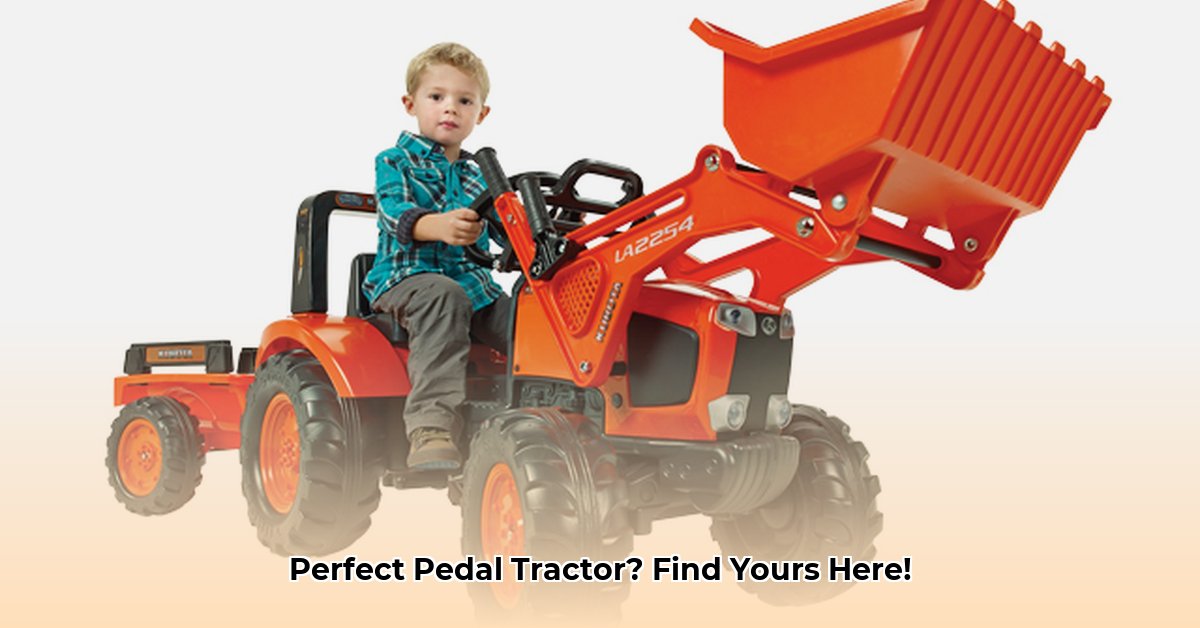
Finding the ideal pedal tractor with a trailer for your child can be surprisingly challenging. Online information is often scarce, leaving parents feeling overwhelmed. This comprehensive guide simplifies the process, helping you navigate the key factors to ensure a safe and enjoyable experience for your little one. For more options, check out this helpful resource on ride-on tractors.
Choosing the Right Pedal Tractor: Key Considerations
Before you start shopping, consider these essential factors to find the perfect fit for your child and your budget:
1. Age and Size: A Perfect Fit
Age appropriateness is paramount. Always check the manufacturer's recommended age range and weight limits. A tractor too small will be frustrating; one too large is dangerous. Measure your child's height and weight to ensure a comfortable and safe fit. Look for adjustable seats if possible to extend the tractor's usable lifespan.
2. Material and Durability: Plastic vs. Metal
Pedal tractors primarily use plastic or metal. Plastic models are generally lighter, easier to maneuver, and more affordable – ideal for younger children. However, they may be less durable than metal. Metal tractors provide superior durability and longevity but are heavier and more expensive. Consider the intensity of your child's play style and your budget when making this decision.
3. Essential Features: Enhancing the Fun
Beyond the basics, several features can enhance the play experience:
- Working Steering Wheel: A must-have for a realistic feel.
- Functional Trailer: Expands play possibilities by allowing your child to haul "cargo."
- Sounds and Lights: While fun additions, these extras often increase the price and may not be essential for long-term play.
Prioritize features that align with your child's interests and play style.
4. Safety First: Prioritizing Protection
Safety should be your top priority. Look for:
- Sturdy Construction: The tractor should feel solid and well-built, without any wobbly parts.
- Working Brakes: Essential for preventing accidents and enhancing safety.
- Smooth Edges: Avoid tractors with sharp edges or corners that could cause injury.
- Low Center of Gravity: Improves stability and reduces the risk of tipping over.
5. Brand Reputation: A Guide to Quality
While specific brand recommendations are limited due to data constraints, carefully examine manufacturer information for safety certifications and material details. Reading online reviews from other parents, when available, can provide valuable insights.
6. Budget: Setting Realistic Expectations
Pedal tractors come in various price ranges. Determine a budget beforehand to avoid overspending. Remember, a higher price does not always guarantee better quality; prioritize durability and safety features.
7. Where to Buy: Finding Your Tractor
Pedal tractors are usually sold at:
- Major Online Marketplaces: Offer a wide selection and price comparisons.
- Toy Stores: Local stores offer in-person examination and immediate purchase.
- Farm Supply Stores: May offer more robust, heavy-duty models.
A Step-by-Step Guide to Selecting Your Pedal Tractor
Follow these steps to find the perfect tractor:
- Assess Your Child's Age and Size: Use manufacturer's guidelines and measure your child.
- Choose Material: Weigh the pros and cons of plastic and metal based on durability and budget.
- Select Essential Features: Prioritize features that will enhance play value for your child.
- Prioritize Safety: Ensure the tractor has sturdy construction and functional brakes.
- Set Your Budget: Allocate a suitable amount based on your financial constraints.
- Research Brands (When Possible): Seek out available information about safety and materials, and look for online parent reviews.
- Shop Around and Compare Prices: Before committing to a purchase, examine multiple retailers' offers.
Maintenance and Care: Extending the Tractor's Lifespan
Proper maintenance keeps your child's pedal tractor safe and functional:
- Regular Cleaning: Wipe down the tractor after each use to remove dirt and debris.
- Occasional Lubrication: Lubricate moving parts periodically to ensure smooth operation.
- Proper Storage: Store the tractor indoors or in a covered area to protect it from the elements.
- Periodic Inspection: Regularly check for signs of wear or damage.
Conclusion: Making the Right Choice
Choosing the right pedal tractor is about more than just buying a toy; it's about providing hours of outdoor fun and imaginative play. By carefully considering these factors and following this guide, you can find the perfect tractor that's safe, durable, and suited to your child's age and abilities. Remember, safety and durability should be your top priorities.